7 days in Valle d'Itria: a luxury itinerary of masserias, white villages and authentic experiences
Browse the article:
- Days 1 and 2: arriving in Alberobello and first breath of the Valle
- Days 3 and 4: Martina Franca, Cisternino and the culture of grilled meats
- Giorni 5 e 6: Ceglie Messapica, Ostuni e le masserie storiche
- Giorno 7: un'esperienza finale tra cantina, frantoio e campagna
Seven days in the Valle d'Itria are never quite enough, but they are sufficient to understand why this corner of Puglia has become one of Europe's most sought-after destinations. It is not just a matter of trulli or centuries-old olive groves, although the landscape has a painterly quality that international travellers recognise immediately. It is a place of rich layering: every town tells a different town, every masseria carries a history you can still sense in the air, every glass of Locorotondo DOC poured at sunset offers a taste of something timeless and distinct.
This itinerary is built for those who want to move through the Valle d'Itria at the right pace: slowly enough to absorb the details, carefully enough not to waste a single one of the seven evenings. Whatever your choice of sanctuary—whether a restored masseria, a historic trullo, or a boutique estate nestled in the countryside—the experience begins with an exceptional home. Raro Villas’ curated portfolio spans the entire valley, allowing you to craft this itinerary without a single compromise.
Days 1 and 2: arriving in Alberobello and first breath of the Valle
Alberobello is the natural entry point for those arriving from Bari or Brindisi airport. The town has been a UNESCO World Heritage Site since 1996 and its trulli are probably the most photographed architecture in southern Italy, but the risk of experiencing it as a purely tourist destination is avoided by choosing the right moment: the early morning hours, when the lanes of the Rione Monti are silent and the light bends between the limestone cones in a way that no photograph faithfully reproduces.
The first afternoon deserves a stop in Locorotondo, just a few minutes by car. It is one of the most beautiful villages in Italy, recognised with the Touring Club's Orange Flag for the harmony of its forms and the walkability of its historic centre. Its "cummerse", the distinctive houses with sloping roofs in two layers of limestone slabs, are different from the trulli but equally unique: you walk the lanes looking upward, where the rooftops create a geometry that changes at every corner. From the Locorotondo belvedere, the view across the Valle d'Itria on a clear day has no equal.
In the evening, dinner at EVO in Alberobello sets the perfect tone for the end of your first two days: just sixteen covers, an exclusive selection of low-intervention Apulian wines, and a menu crafted around twenty-five distinct extra virgin olive oil cultivars.
As for accommodation, Trullo Emmebi offers a panoramic pool, 5 suites and a direct view of the Valle d'Itria, with 10 beds ideal for groups or families. Alternatively, Trulli Pozzo del Geco in Locorotondo hosts up to 6 guests in a trullo complex with a private pool in the Cisternino countryside, the perfect choice for guests looking to fully immerse themselves in the authentic Itria Valley countryside.
Days 3 and 4: Martina Franca, Cisternino and the culture of grilled meats
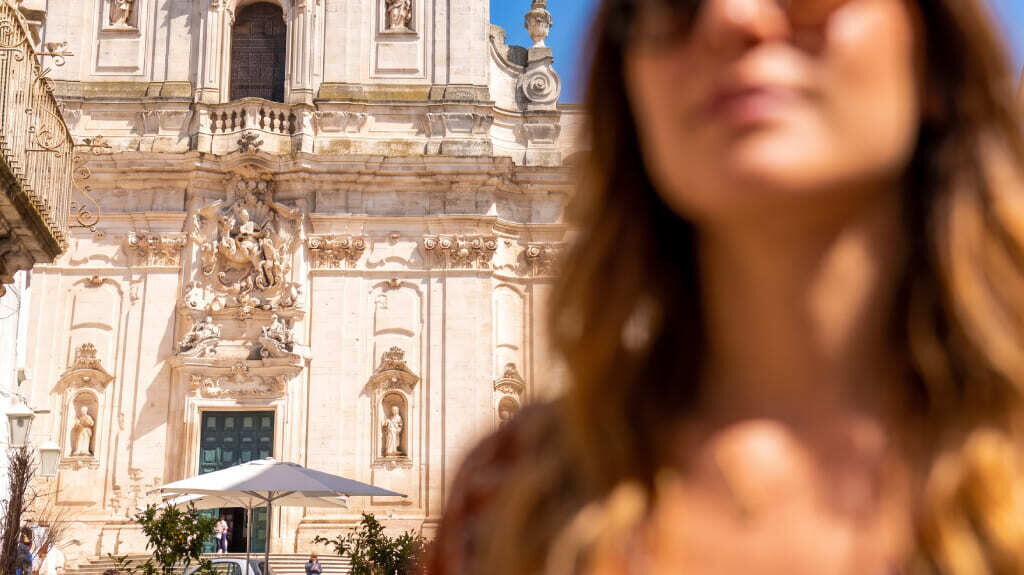
Martina Franca holds an unrivaled title: the Baroque capital of the Itria Valley. Its historic heart revolves around the Basilica di San Martino and the Palazzo Ducale—a town that constantly surprises with the grandeur of its design and the serene silence of its hidden courtyards. The town hosts the Festival della Valle d'Itria every July, one of Italy's most important lyric opera festivals, and carries a cultural vitality that is perceptible even outside the season.
From a gastronomic standpoint, Martina Franca is where you taste capocollo DOP: sliced thin, paiOn the culinary front, Martina Franca is the definitive stop to taste authenticred with a glass of local wine, it is one of those products that embody a century-old tradition of meat curing and ageing. Local custom holds that you do not leave Martina Franca without having tried it.
Day three culminates in Cisternino, one of Italy's 100 most beautiful villages, where the bombette tradition has transformed the old town's butcher-grill shops (macellerie con fornello) into a nationally recognised gastronomic institution. Bombette (rolls of horse or veal meat filled with cheese, grilled over an open flame at the counter) are not street food in the conventional sense: they are a social ritual consumed standing up, at the counter, with an ice-cold beer and smoke drifting from the grills. It is difficult to find anything more authentic.
For these two days, Trullo Cielo in the Martina Franca countryside serves as your private sanctuary: a large trullo with an independent master suite, pool and a central position relative to the Valle's main villages. Trulli Itaka in Ceglie Messapica offers 4 rooms in two independent units with an organic vegetable garden and barbecue area, perfect for those who want to cook with the territory's own produce.
Days 5 and 6: Ceglie Messapica, Ostuni and the historic masserias
Ceglie Messapica, declared "City of Art and Land of Gastronomy," is the village that food lovers discovered before anyone else. Its whitewashed historic centre, with chianca-paved lanes and silent little squares, is the ideal setting for dinner at Cibus: a fifteenth-century convent, the kitchen rotates nearly 300 seasonal creations, podolico beef tartare, sagnapenta ragù and donkey stew in terracotta. Pugliese cuisine before it became an international trend.
Day five turns toward Ostuni—Puglia’s quintessential White City. Soaring above the Adriatic plain, its medieval skyline is one of the region’s most iconic sights. Yet Ostuni is far more than a postcard backdrop: the lanes of the ancient village, the Gothic-Romanesque Cathedral, the noble palaces converted into charming B&Bs, and the panoramic terrace from which the sea seems within reach even though it lies twenty kilometres away.
The sixth day is dedicated to Masseria Il Frantoio, just minutes from Ostuni: dinner in the outdoor courtyard with zero-mile cuisine, four estate extra-virgin oils and 300 seasonally rotating dishes. An appointment that must be booked in advance and that many Raro Villas guests consider the most memorable moment of the entire stay.
For these two days, Masseria Borgopietra is the reference choice: 7 bedrooms, 14 beds, pool and 4 hectares of centuries-old olive trees just 4 km from Ostuni. For those seeking the boutique hotel formula with included services, Masseria Lamagrotte by Raro Rooms offers rooms and suites in an 1800s masseria just 800 metres from the sea at Ostuni's Parco delle Dune Costiere, with breakfast and on-site assistance included.
Read also: Masseria weddings: the definitive guide to planning your perfect day in Puglia
Day 7: a final experience between winery, oil mill and countryside
The seventh day trades transit for true immersion. The Valle d'Itria produces two recognised DOC wines: Locorotondo DOC and Martina Franca DOC, white wines made from Verdeca and Bianco d'Alessano grapes. A winery visit with a tasting paired with local cheeses and Altamura bread is the most fitting experience for those who want to take something home that goes beyond a souvenir.
Alternatively, many of the Valle's historic masserias organise visits to the oil mill, where it is possible to witness the olive pressing process (in season, between October and November) or to taste extra-virgin oils from native cultivars. It is an experience that permanently changes the way you perceive Pugliese olive oil, and one that Raro Villas can organise on request for its guests.
Those who wish to structure the last day around a nature excursion can walk the Bosco delle Pianelle near Martina Franca: A protected nature reserve of Mediterranean maquis, carved by dramatic ravines and crisscrossed with marked hiking trails and the Grotta del Sergente Romano, believed to have been the hideout of Puglia's last brigand. A corner of the Valle d'Itria that few tourists know, and well worth the detour.
To explore the full range of villas, trulli and masserias available in the Valle d'Itria through Raro Villas and build a personalised itinerary, the team is available through the contact form for a tailored proposal based on your dates, number of guests and accommodation preferences.