What are the best alternatives to the Costa Smeralda? 5 lesser-known destinations in Sardinia
Navigate the article:
- Portobello di Gallura: Unassuming Luxury on the Gallura Coast
- San Teodoro: Sardinia's "Little Tahiti" on the eastern coast
- Golfo di Orosei: Italy's most unspoilt sea
- Stintino: La Pelosa and the still-authentic north-west coast
- Villasimius: the south that competes with the north for sea quality
The Costa Smeralda is one of the most iconic beach destinations in the Mediterranean, and will remain so for a long time. But those who know it well are aware that August in Porto Cervo is an experience that requires tolerance for crowds, patience in traffic and a budget significantly higher than the rest of the island. The question that the most experienced travellers ask themselves is not whether Sardinia is worth a visit, but where to go in Sardinia to find the same quality of sea, the same exclusivity of accommodation with only a fraction of the crowds.
There is an answer, and it is beautifully multifaceted. Sardinia is an island with nearly 2,000 km of coastline, and the Costa Smeralda occupies only a limited portion of it. What lies beyond, in many cases, is equally beautiful, less crowded and still accessible to those who know where to look. This guide selects five destinations worth considering, with a precise eye on those also seeking a prestigious private villa as their personal retreat.
Portobello di Gallura: Unassuming Luxury on the Gallura Coast
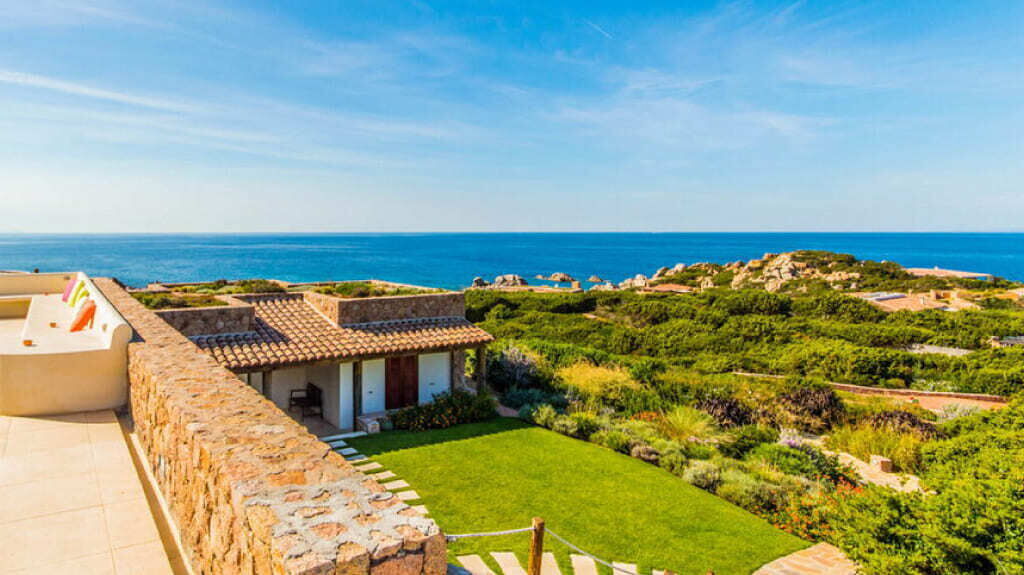
Portobello di Gallura is, in many ways, what the Costa Smeralda was before it became famous. A peninsula in the north-east of Sardinia, in the Gallura, with 3 km of practically private coastline, white sand coves reachable only by boat or on foot through Mediterranean scrub trails, and a level of privacy that Porto Cervo can no longer guarantee in high season.
There are no luxury boutiques, no marina with superyachts, far from the usual evening crowds of a town square. There is the sea, where the water shifts effortlessly from shimmering turquoise to deep emerald even when the wind drops, and there is a quiet that high-end travellers are seeking with increasing urgency.
In areas like this, average water temperatures reach their peak between August and September, around 24-25°C, making it an ideal destination for those who want to extend the season beyond Ferragosto.
Raro Villas has in Portobello di Gallura some of its most exclusive properties. Villa Vega is an exceptional property with two independent villas for 20 guests, 24/7 security, pool and exclusive access to 3 km of coastline with white sand coves, plus on-request services (private chef, catamaran, transfers, luxury car hire). Villa Luce offers 7 bedrooms with a light-bulb-shaped pool and breathtaking sea views, bookable as two independent villas for extended families or groups of friends.
Read also: Puglia or Sardinia? How to choose the right destination for your exclusive villa holiday
San Teodoro: Sardinia's "Little Tahiti" on the eastern coast
South of the Costa Smeralda, along the eastern coast, San Teodoro has in recent years become one of the most sought-after destinations for travellers who want a different kind of compromise: less ostentatious glamour than Porto Cervo, but beaches that compete with any Mediterranean destination for water quality and landscape beauty.
Cala Brandinchi, nicknamed "Little Tahiti" for the colours of the sea, is one of the most transparent-watered beaches on the entire island. San Teodoro also offers fashionable venues and nightlife, making it one of the Sardinian destinations best suited to those who want to combine sea quality with a quality evening entertainment offer. Behind Spiaggia La Cinta, the serene lagoon is home to pink flamingos—a sight that turns an ordinary beach day into something extraordinary.
San Teodoro is about 45 minutes from Olbia-Costa Smeralda airport, a direct connection that makes it easily accessible without crossing the entire Gallura. Those seeking a private villa in the area can explore the Raro Villas selection among properties in northern Sardinia, which include structures reachable from Olbia in under an hour.
Golfo di Orosei: Italy's most unspoilt sea
The Golfo di Orosei is perhaps the definitive alternative to the Costa Smeralda. While not necessarily quieter in peak summer, it offers an untamed, wilderness-first experience that Porto Cervo simply cannot match. The coves of the Gulf, from Cala Goloritzé to Cala Luna, from Cala Sisine to Cala Biriola, are accessible only by boat or through demanding trekking trails. No roads reach them. No kiosks, no hired sunbeds.
Cala Goloritzé, on the eastern coast of Sardinia, is celebrated for its wild and unspoilt beauty and was declared a Natural Monument in 1995. In 2025 it was named the most beautiful beach in the world by one of the leading international rankings. The limestone spire of L'Aguglia, 143 metres high, dominates the cove with a scenic presence that photographs never fully capture.Chilled by subterranean springs, the water here is cooler than in neighboring coves and boasts an almost surreal turquoise hue.
The ideal base for exploring the Gulf is Cala Gonone or Orosei, both reachable by car from the inland. From here, boat excursions are organised that allow visitors to reach multiple coves in the same day. For those who want to combine this experience with a stay in a prestigious villa, Raro Villas properties in northern and central Sardinia are the starting point from which to build your itinerary with the team's support.
Stintino: La Pelosa and the still-authentic north-west coast
Stintino lies in the north-west of Sardinia, on the Capo del Falcone peninsula, about an hour and a half from Olbia but reachable in similar times from Alghero-Fertilia airport. It is one of the island's most iconic destinations for the absolute quality of its sea, with Spiaggia La Pelosa considered among the most beautiful beaches in Europe: very pale sand, shallow turquoise water and the Aragonese Tower emerging from the water just metres from the shore.
Access to La Pelosa is limited and requires online booking, introduced to protect a delicate environmental balance, and this is in fact an advantage for those who choose it: the limited numbers guarantee that the beach never reaches the August overcrowding levels that until a few years ago made it practically inaccessible during the central hours of the day.
The Stintino area has different characteristics from north-eastern Sardinia: the terrain is flatter, the Mediterranean scrub changes character, and the tuna fishing tradition has left traces in the local culture still found in the town's trattorias. It is a less fashionable and more authentic Sardinia, well suited to a private villa stay away from the Costa Smeralda's social media circuit.
Villasimius: the south that competes with the north for sea quality
Villasimius is at the far south-east of Sardinia, within the Marine Protected Area of Capo Carbonara, and represents perhaps the greatest surprise for those yet to discover it: a sea that for transparency and colour owes nothing to the Costa Smeralda, with beaches like Punta Molentis and Porto Giunco regularly appearing in international rankings among the finest in Europe.
Villasimius is renowned for its turquoise waters and white sand beaches, and the Capo Carbonara Marine Protected Area offers rich marine biodiversity ideal for snorkelling and diving. The protected area limits some activities but guarantees water quality and marine wildlife presence that are simply not found in other stretches of Sardinian coast.
The logistical advantage of Villasimius is its proximity to Cagliari airport (about 45 minutes), which offers many more international connections than Olbia, especially outside the peak season. Villa Rei, available in the Muravera area just 16 km from Villasimius, is the Raro Villas proposal for those who want to stay in this part of the island with the privacy of a private residence.
To explore the full selection of Raro Villas properties in Sardinia, from the exclusive Portobello di Gallura residences to the southern coast properties, the team is available via the contact page for a personalised proposal based on destination, dates and group profile.
From the Brunello harvest in Tuscany to the tonnare in Sicily: 8 Italian gastronomic experiences to live at least once
Navigate the article:
- The Brunello harvest in Montalcino, Tuscany
- The "tonnare of Favignana" and Marzamemi, Sicily
- Black truffle hunting in Umbria
- Olive pressing at an Apulian oil mill
- Brunello and Nobile cellar tasting in Tuscany
- Sardinian pecorino and the cheese-making tradition
- An apulian cooking class in a masseria
- The dawn fish market in Gallipoli or Trapani
Italian food is not truly understood if consumed only in restaurants. It is understood when you enter a vineyard during harvest and pick the grapes that will become Brunello, when you walk through a tonnara's warehouses and grasp why Favignana transformed canned tuna in olive oil into one of the great inventions of modern food preservation, when you taste extra-virgin olive oil freshly pressed for the first time, still green and peppery in the throat. These are experiences that change the way you eat for the rest of your life.
The characteristic common to all eight experiences in this list is one: they are best lived from a private estate. A villa, a masseria, a farmhouse. A place that is yours for a week, where you can return in the evening after spending the afternoon in a winery, your nose full of grape marc and your head full of what you have learnt. Raro Villas has properties in the territories where these experiences are found, and this guide connects them.
1. The Brunello harvest in Montalcino, Tuscany
September and October in Montalcino are unlike any other time of year. The air smells of must, the vineyards surrounding the medieval hilltop town in the Sienese hills change colour within days, and in the Brunello cellars, one of the world's most celebrated and long-lived red wines, one of those moments is lived that producers wait 365 days to witness.
The tourist harvest in Montalcino allows participation in the picking, learning to taste the grapes to understand the real meaning of "ripe" by distinguishing skin, pulp and seeds, and witnessing the first stages of vinification. Structured experiences typically include lunch in the cellar, a visit to the barriques and a tasting of an already-released Brunello compared with the new wine. A before and after that few people forget.
Villa Ambrosini in Montalcino is the ideal base for this experience: a prestigious villa with a pool immersed in the vineyards, with the option of a professional chef in the villa and a housekeeper for meal preparation, minutes from the area's most important cellars.
2. The "tonnare of Favignana" and Marzamemi, Sicily
The tonnara is one of Sicily’s most profound cultural and architectural landmarks—and one that can only be fully appreciated in person. In Favignana, in the Egadi archipelago, the former Florio Stabilimento delle tonnare di Favignana e Formica is today a museum that narrates how Vincenzo Florio, in 1841, invented here the method of preserving tuna in olive oil, transforming an island into one of the most important industrial sites of nineteenth-century Sicily.
In Marzamemi, in the south-east of Sicily, the tonnara stands at the centre of one of the island's most photographed fishing villages. The large central square, the tonnara warehouses, the fishermen's cottages and the village’s tuna-curing tradition lives on in its local artisan food shops. Combining both tonnare in a single Sicilian itinerary allows one to understand how this tradition expressed itself in different ways in the island's north-west and south-east.
Villa Smeraldo at Verdura Resort in Sciacca, Sicily, is a private sea-front villa with three bedrooms at the heart of the Rocco Forte resort, the perfect base for exploring the tonnare and the western Sicilian coast.
3. Black truffle hunting in Umbria
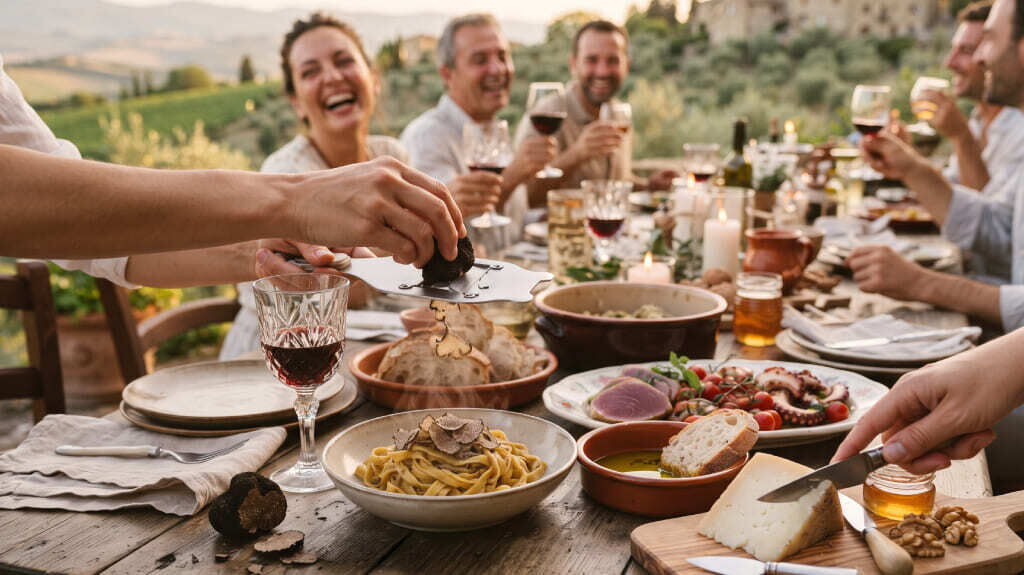
Umbria is the Italian region where the black truffle of Norcia and Spoleto has its true homeland. The winter black truffle season runs from December to March, but the summer black truffle (scorzone) is available from June to September, making this experience possible even in the warm season. Truffle hunting with the dog is one of the most requested gastronomic experiences in Italian experiential tourism: you follow the truffle hunter and his truffle dog through oak and hornbeam woods, learn to recognise the signs that indicate the presence of the underground fungus, and finish with a tasting of the same truffles found, grated over fresh pasta or scrambled eggs.
Raro Villas has a selection of villas in Umbria among the hills of Perugia and Trasimeno, from which the truffle areas of Norcia, Spoleto and Cascia can be reached in under an hour. For those who want to combine black truffle, Sagrantino di Montefalco and an Umbrian country farmhouse, this is the most authentic combination that central Italy can offer.
4. Olive pressing at a Pugliese oil mill
Apulian extra-virgin olive oil is among the world's finest by both quantity produced and quality. Olive pressing, the extraction of oil from freshly harvested olives, takes place between October and December, and is one of those spectacles that permanently changes the way you use olive oil in the kitchen.
Puglia counts over 60 million olive trees, many of them centuries old. Witnessing the harvest, following the full cycle from picking to pressed oil, and tasting the "freschissimo", the oil just extracted, still greenish-hazy and with a peppery catch in the throat that disappears after a few weeks, is a sensory experience with no equivalent.
Masseria Lamagrotte in Ostuni, surrounded by ancient olive groves just 800 meters from the sea, produces its own extra-virgin olive oil and invites guests to experience the process right on site. Meanwhile, Masseria Il Frantoio producing four distinct estate extra-virgin oils from its own trees, serves as the benchmark culinary destination for an authentic olive oil experience.
5. Brunello and Nobile cellar tasting in Tuscany
Tuscany wine is not only Chianti. Montalcino, Montepulciano and the Val d'Orcia produce some of the world's most important red wines, with ageing that ranges from 5 to 25 years and international rankings that regularly place them among the world's best 100 wines.
A guided tasting by a professional sommelier in the cellar, with access to the ageing barriques and a comparison of different vintages of the same wine, is an experience that requires no more than two hours but leaves an understanding of Italian wine that no abstract course can provide. Some Montepulciano cellars also preserve Etruscan tombs in their underground chambers, transforming the visit into a journey through millennia of history. Villa Ambrosini in Montalcino is also the ideal base for these appointments.
6. Sardinian pecorino and the cheese-making tradition
Sardinia is the Italian region with the highest density of sheep farming per square kilometre, and Sardinian pecorino DOP is one of Europe's oldest and most identity-defining cheeses. Visiting a small-scale dairy in the Sardinian hinterland, seeing the processing of sheep's milk, following the ageing in natural stone caves and tasting fresh, semi-aged and aged cheese side by side is a sensory journey that tells the story of inland Sardinia better than any museum.
The area of Arzachena and the Gallura, where Raro Villas has some of its most exclusive properties, is about an hour from the Barbagia hinterland where this tradition is still alive. Villa Le Vele in Arzachena, with a private 1,500 sqm garden and panoramic terrace, is the base from which to build this kind of gastronomic excursion.
Read also: Puglia or Sardinia? How to choose the right destination for your exclusive villa holiday
7. An apulian cooking class in a masseria
Apulian cuisine is among Italy's most replicable and satisfying to learn, because it is based on a few ingredients of absolute quality and on techniques that anyone can master in a few hours: hand-made durum wheat pasta (orecchiette, cavatelli, strascinati), Bari-style focaccia, fried pittule, pureed broad beans with wild chicory. A cooking class in a masseria, led by a local cook or a chef from the territory, is the most direct way to take something concrete home beyond the memory of the trip.
Raro Villas can arrange private in-villa cooking classes upon request, complete with a private chef and hand-selected local market ingredients. For masserias equipped with professional outdoor kitchens, such as Masseria Borgopietra in Ostuni with its panoramic terraces and 4 hectares of olive trees, the kitchen session becomes an immersive experience that involves the entire day.
8. The dawn fish market in Gallipoli or Trapani
Gallipoli and Trapani share the rarest characteristic of Italian fish markets: absolute freshness and timing. At 5:30 in the morning, as the harbour comes alive with the first boats returning from the night's fishing, the market stalls fill with what the night sea has produced: still-live sea urchins, still-moving octopus in the crates, sea bream, grouper, lobster. It is not an experience for lazy morning habits, but it is one of the most authentic that Italy offers.
In Gallipoli, the covered fish market in the heart of the old town is one of Salento's most vibrant gastronomic institutions. In Trapani, the Arab tradition of fish couscous meets the harbour market in a context where tuna fishing has left deep traces in the local food culture. For those staying in a villa in Salento or in the Trapani area with Raro Villas' Sicilian properties, this is the experience that best tells the story of the relationship between the sea and food in the Mediterranean.
To curate a stay featuring these signature experiences across Raro Villas destinations, the team is available via the contact form for a personalized proposal that seamlessly blends culinary experiences, luxury villa living, and the local region.
Where to go to the beach in Italy in September? The best destinations for extending summer in an exclusive villa
Navigate the article:
- Puglia in September: Warm Seas and Uncrowded Beaches
- Sardinia in September: peak water temperatures and quiet glamour
- The key advantages of booking a luxury villa in September
- What to do in September in Raro Villas destinations: beyond the beach
September is the month that the most experienced travellers keep for themselves. Beaches empty out, the water reaches its peak temperature of the year, prices fall and restaurants return to working with care. Those who have spent August in an exclusive villa already know: extending summer by a few weeks in the right destination turns what could be a simple holiday postponement into something qualitatively superior.
This guide is for those who want to understand where it is genuinely worth going to the beach in Italy in September, with a precise focus on the quality of the experience: not just water temperature and beach crowding, but also the availability of luxury villas, masserias and prestigious residences where the summer season extends in full comfort.
Puglia in September: Warm Seas and Uncrowded Beaches
Puglia benefits more than almost any other region from the shift into September. The reason is simple: the Ionian sea, which washes the western Salento between Gallipoli and Porto Cesareo, accumulates heat throughout the summer and in September reaches temperatures between 24 and 26°C in the first half of the month, with values still above 22-24°C in the second half. The Ionian coast tends to be 1-2°C warmer than the Adriatic side, and many locals consider September their favourite month for swimming because the water retains the summer heat while the air becomes pleasantly cool.
In Gallipoli, average sea temperatures hover around 25.4°C—the highest anywhere along the Salento coast this month. Iconic beaches like Baia Verde and Punta della Suina lose their heavy August crowds while keeping their crystal-clear waters. Top beach clubs stay open, offering attentive service without the frantic wait times.
Staying in a villa in Salento in September also comes with distinct practical advantages: popular areas like Valle d'Itria and Ostuni should still be booked 2 to 4 weeks ahead (as September grows more popular with insider travelers), airport transfers can easily be set up just 5 to 7 days out, and getting a table at great local restaurants rarely takes more than a same-day call.
- Gallipoli and the Ionian Salento: water up to 25°C, free beaches accessible, lidos open without queues
- Ostuni and the Adriatic coast: sea between 24 and 26°C, Parco delle Dune Costiere in ideal conditions, end-of-summer festivals and markets in the historic towns
- Porto Cesareo and Santa Maria di Leuca: crystal-clear waters of the Gulf of Taranto, shallow seabed and white sand, ideal for families and snorkelling
Among Raro Villas' properties in this area: Masseria Lamagrotte, just 800 metres from the sea at Ostuni's Parco delle Dune Costiere, with 11 bedrooms and 21 beds among centuries-old olive trees, is the ideal September choice for large groups wanting to combine beach, countryside and local gastronomy.
Read also: Puglia or Sardinia? How to choose the right destination for your exclusive villa holiday
Sardinia in September: peak water temperatures and quiet glamour
In Sardinia, September has a solid and well-deserved reputation among those who know the island well. The sea is at its thermal peak of the year, between 26 and 28°C. Beaches empty out almost overnight after 10 September and restaurants return to cooking with care. Prices drop by 30-40%.
In Porto Cervo and across the Costa Smeralda, the month of September marks a shift in pace that is less about winding down and more about refinement: the remaining crowd is international, discerning, and focused on quality over quantity. Every September, the region hosts the Sardinia Cup sailing regatta, filling Porto Cervo’s marina with world-class yachts and making it one of the most exclusive scenes in the Mediterranean autumn.
In areas like Olbia, average water temperatures reach their highest point between August and September, around 24-25°C. This is why September is so popular among those who want to enjoy long swims without the full crowding of Ferragosto.
At Portobello di Gallura, the situation is even more favourable: the coves reachable only by boat, accessible in high season only in the early morning hours, become available for most of the day in September. This effortless atmosphere is exactly what properties like Villa Vega were built for. Designed as two independent villas hosting up to 20 guests, it offers private access to 3 km of coastline filled with white-sand bays, along with on-demand amenities like private chefs, catamaran charters, transfers, and luxury vehicle hires. What would require meticulous planning in July unfolds with effortless ease in September.
Among other Raro Villas properties in Sardinia for September: Villa Luce at Portobello di Gallura, with 7 bedrooms and pool, bookable as two independent villas for extended families or groups of friends, and Villa Le Vele in Arzachena, 2 km from Porto Cervo, with a private 1,500 sqm garden and panoramic terrace overlooking the Tyrrhenian Sea.
The key advantages of booking a luxury villa in September
Anyone who has stayed in an exclusive villa in Puglia or Sardinia during both August and September will rarely choose August again if they can avoid it.
The first being the quality of daily life: no traffic along the backroads, no queues at beach entry points, and no waiting at the morning fish market. Everything runs seamlessly. The second advantage is price: high-end villa rates in September are, on average, 30% to 45% lower than during the peak of July and August—substantial savings that become immediately noticeable on a one- or two-week stay.
The third advantage, often overlooked, is the culinary experience: September coincides with the grape harvest (vendemmia) in Puglia and a return to unhurried, attentive service at top local restaurants that operate at maximum capacity in August. Wineries throughout the Itria Valley host exclusive tastings and tours, while farmers' markets showcasing late-summer produce—from ripe figs and heritage tomatoes to early-harvest olives—are at their absolute best.
To check availability of Raro Villas properties in the destinations covered in this guide for September and October 2026, the fastest way is to contact the team directly or to browse availability in the villas section. The central weeks of September, from the 7th to the 21st, offer the best balance of climate, availability and pricing.
What to do in September in Raro Villas destinations: beyond the beach
September opens up a whole range of experiences that are simply too hot or crowded to enjoy in August.
In Puglia, daytime temperatures settle into a comfortable 25–28°C, making afternoon strolls through historic whitewashed towns genuinely enjoyable. Destinations like Ostuni, Locorotondo, Cisternino, Alberobello, and Martina Franca, places you could only comfortably visit at dawn or dusk in August, can be explored at a relaxed pace all day long.
In Sardinia, September offers perfect conditions to explore inland Gallura, tasting wines at boutique vineyards in Arzachena, or visiting ancient stone nuraghi and historic villages that get overlooked during peak summer. In Porto Cervo, the sailing season brings a refined, energetic pulse to the town.
Across both regions, overall service reaches its peak in September. Private chefs, boat charters, and custom wine-tasting tours are far easier to book and far more tailored than during the summer rush. Guests at any Raro Villas property can arrange these experiences directly through our team and our trusted local network.